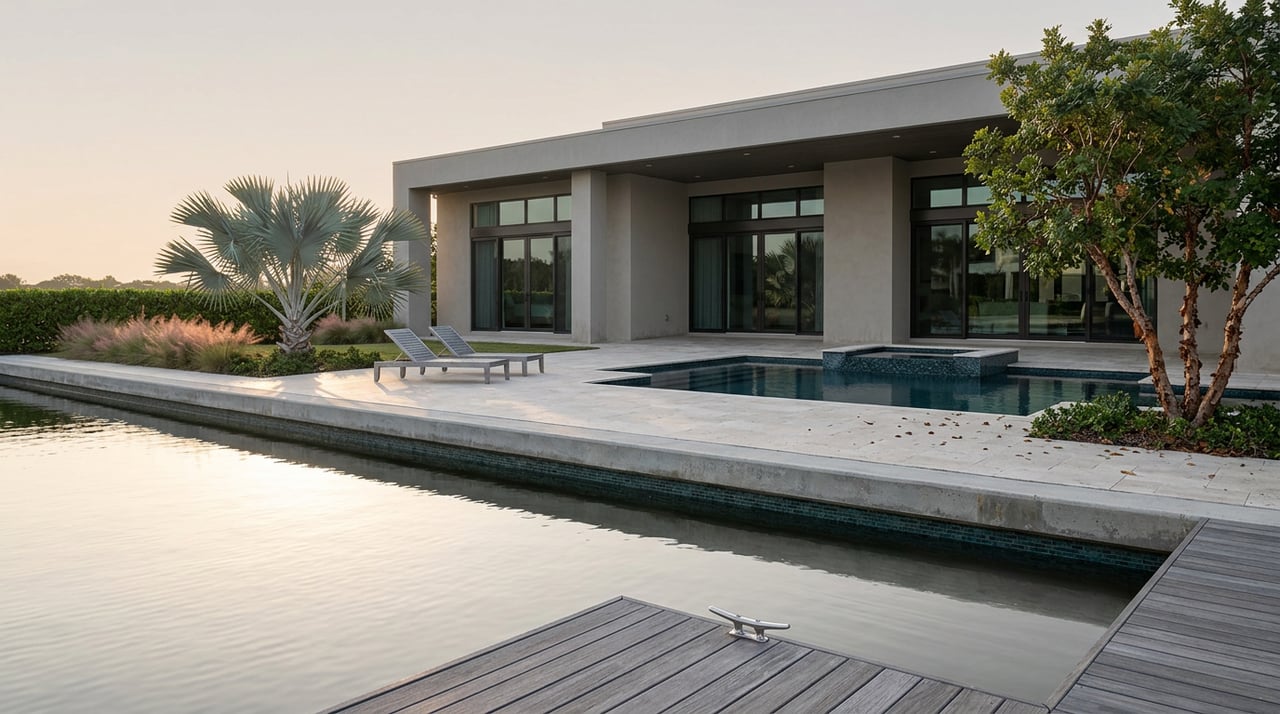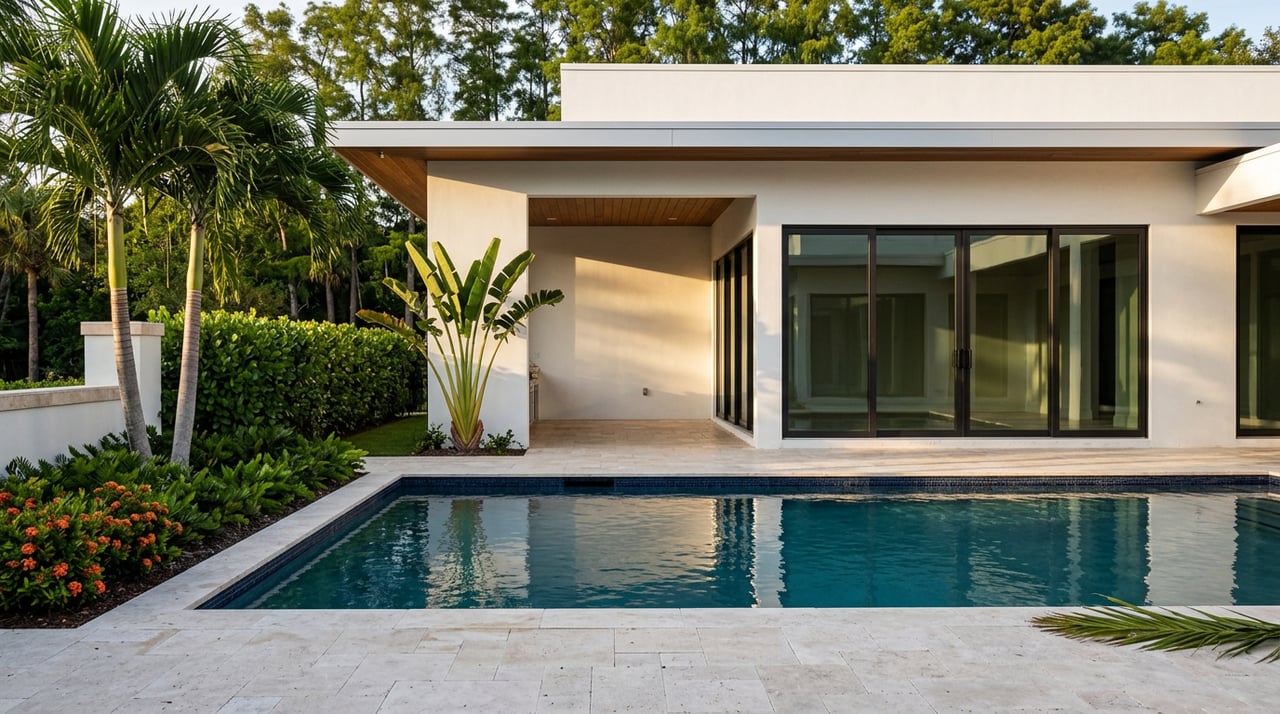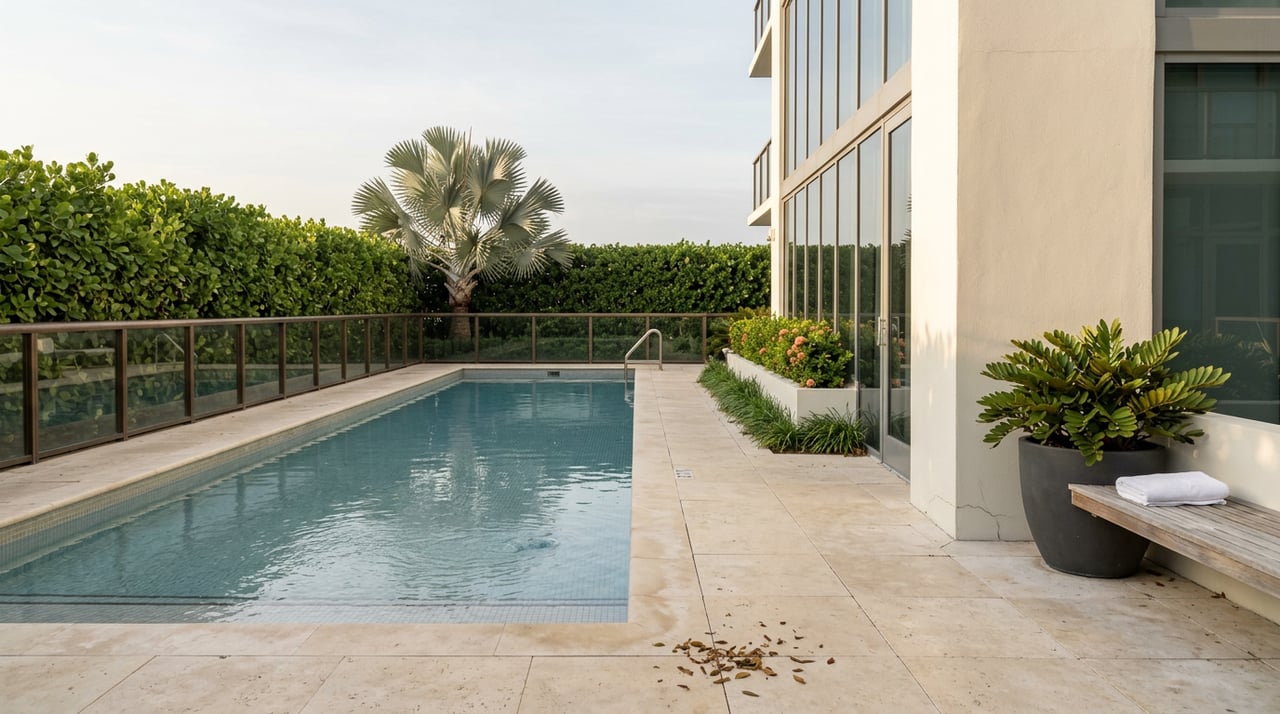
A buyer comparing two Bay Colony listings side by side sees the same zip code, similar square footage, comparable Gulf frontage, and assumes the monthly carrying cost will land in the same neighborhood. Then the condo documents arrive. One building's annual condo fee is roughly the price of a modest car. The other's is roughly the price of a modest house. Same community name on the sign at the gate. Two entirely different financial products.
That gap is the story most Bay Colony guides skip past on their way to describing the sunsets. It matters because "Bay Colony" is not one building or one fee schedule. It is six named condominium towers, a separate enclave of freestanding beachfront estates, a second single-family pocket a few blocks off the sand, and a golf club that does not actually sit behind any of its gates. Treating it as a single line item on a comparison spreadsheet is where buyers get surprised, and where sellers who understand the difference can price with more precision than the portals allow.
Six Towers Wearing One Name
Walk the beachfront stretch of Bay Colony and you pass six distinct condominium buildings, each with its own construction year, unit count, and view corridor. Windsor at Bay Colony went up in 1998 and is widely considered the most exclusive of the group: 21 floors, only two residences per floor plus seven penthouses, for a total of 31 direct beachfront units. Units run from roughly 6,070 to 10,465 square feet and have sold between $3.3 million and just under $10 million.
Trieste at Bay Colony is the newest tower in the lineup, built in 2002, and the largest by unit count, with 106 residences across 19 floors. Its views lean toward preserve and partial Gulf rather than the unobstructed frontage Windsor commands, and its footprint sits closer to the Bay Colony Club and the Ritz-Carlton. Units there have sold from $1.385 million up to $5.5 million, meaningfully below Windsor's range even before fees enter the picture.
Toscana at Bay Colony, built in 1999, sits between Marquesa and Salerno with 65 units across 19 floors. Salerno is known for the most encompassing Gulf views in the group, while Marquesa and Toscana pick up more of the Clam Bay outlook and, on higher floors, distant Park Shore lights at night. For buyers who want a lower-density option without giving up beachfront proximity, Mansion La Palma and the adjacent Villa La Palma, a Mediterranean-style enclave of 22 villas built between 1996 and 1998 with private pools, offer a different scale entirely.
Six buildings, six construction eras, six sets of governing documents. That variation alone should stop any buyer from treating "Bay Colony condo" as a single category.
The Number That Changes Everything
Here is where the variation stops being a matter of taste and starts being a matter of underwriting. Compare Windsor and Trieste on paper: both are Bay Colony beachfront towers, both offer large-format units, both come with mandatory club access. The fee stacks are not close.
| Tower | Built | Units | HOA Fee | Master HOA | Condo Fee | Mandatory Club Fee |
|---|---|---|---|---|---|---|
| Windsor at Bay Colony | 1998 | 31 | $2,741/year | $1,536/year | $61,460/year | $1,009/year |
| Trieste at Bay Colony | 2002 | 106 | $2,786/year | $1,664/year | Not separately itemized at Windsor's scale | $1,044/year |
The line that stops most buyers cold is Windsor's condo fee: $61,460 a year, on top of its HOA and master association charges. That single figure runs more than ten times the combined HOA and master HOA cost at Trieste. It reflects Windsor's lower unit density, a 31-residence building carrying the same elevator banks, beachfront infrastructure, and staffing costs that a 106-unit tower like Trieste spreads across a much larger base. Fewer neighbors sharing the bill means each owner absorbs a larger share of it.
For a buyer comparing a Windsor unit to a similarly sized Trieste unit purely on list price, that fee difference can add or subtract the equivalent of a car payment every month, indefinitely. It does not show up in a portal's headline price. It shows up in the condo questionnaire a lender requests during underwriting, which is usually the first time a buyer sees the real number in writing.
Rental policy compounds the difference. Windsor does not permit leases at all, which keeps the building owner-occupied and insulates resale value from short-term turnover, but it also means the fee has to be absorbed entirely by full-time or seasonal owners with no rental income to offset it. Trieste allows three leases per year with a 30-day minimum, giving owners a way to defray carrying costs if they choose. Two buildings, two very different answers to the same question: what does this unit actually cost you to hold.
The Golf Club That Isn't Behind These Gates
The second assumption worth correcting involves the name itself. Buyers relocating from other gated golf communities often assume Bay Colony functions the way theirs did: one gate, one bundle of amenities, golf included somewhere in the fee stack. It does not work that way here.
The Estates at Bay Colony Golf Club, an 18-hole championship course designed by Robert von Hagge, is not inside the Bay Colony gates at all. It sits within the Pelican Marsh community, several miles north, and membership is a separate, optional arrangement layered on top of whatever a buyer already pays for their tower or estate home. A buyer who assumes golf access comes bundled with a beachfront address is working from the wrong mental model.
Bay Colony's own gates protect something narrower and, in some ways, more valuable to the buyers who prioritize it: a private beach club with its own restaurant and seasonal event calendar, a tennis club with six Har-Tru courts and a full slate of clinics and round robins, and a concierge team that handles the logistics of arrival and departure. What Bay Colony does not share is Pelican Bay's broader tram system that ferries the larger community's residents to the Gulf. Bay Colony residents cross through their own private gatehouse to their own stretch of beach, a separate operation from the tram-and-boardwalk system that defines the rest of Pelican Bay. A buyer moving from elsewhere in Pelican Bay into Bay Colony is not carrying amenity access with them. They are trading one system for a different, smaller, more private one, and paying for that difference through the club fees layered into each tower's assessment.
What the Numbers From Earlier This Year Say About Buyer Behavior
Naples market data from the first half of 2026 suggests buyers were already doing this kind of homework before they signed. In March 2026, the ZIP code covering Pelican Bay and Bay Colony posted a 37.2 percent year-over-year jump in median closed price, reaching $1,557,500, a figure that reflects how much premium the market places on well-priced beachfront and high-rise inventory when it actually reaches the market. But price is only half the story. By May 2026, condo sales across Pelican Bay, Bay Colony, and Park Shore had risen 25 percent to 125 closings, while days on market for that same segment had extended to 132 days, a 38.9 percent increase over the prior year.
Rising sales alongside longer time on market is not a contradiction. It reads as buyers taking longer to complete diligence before signing, which tracks with what the fee schedules above would predict. A buyer who learns that identical-looking units in different towers carry radically different annual costs has good reason to slow down and request the condo questionnaire before writing an offer, not after.
A Different Ownership Problem Entirely
None of the fee mechanics above apply to Bay Colony's other beachfront product, The Strand at Bay Colony, a gated enclave of just 12 single-family estate homes with direct beachfront access. These are not condominiums, so there is no condo fee to compare tower to tower. Instead, owners carry an HOA fee of $5,969 a year and a master HOA fee of $3,551 a month, a structure built around a small number of large freestanding homes rather than a shared building envelope. Homes here have sold between $9.5 million and $16.4 million, and turnover is rare enough that transactions happen less than once a year on average across the last decade. A buyer targeting the Strand is underwriting an entirely different kind of carrying cost than a buyer comparing Windsor to Trieste, and conflating the two during early research is a common and avoidable mistake.
The Takeaway for Anyone Comparing Bay Colony to Anywhere Else
The practical lesson is not that Bay Colony is expensive. It is that "Bay Colony" as a search term or an MLS filter flattens six towers, two estate enclaves, and an off-site golf membership into something that looks like one product. It isn't. The building name on the deed determines the fee schedule a buyer will live with for as long as they own the unit, and the community name on the gate does not determine what amenities actually come with it. Anyone comparing Bay Colony to another Naples beachfront address, or comparing two Bay Colony units to each other, needs the building-level documents before the comparison means anything.
If you're weighing a Bay Colony purchase or preparing to list a property here, the team at J2 Luxury Group can walk you through the specific tower or enclave fee structure that applies to your situation. Discover Elevated Living — Schedule a Private Consultation.